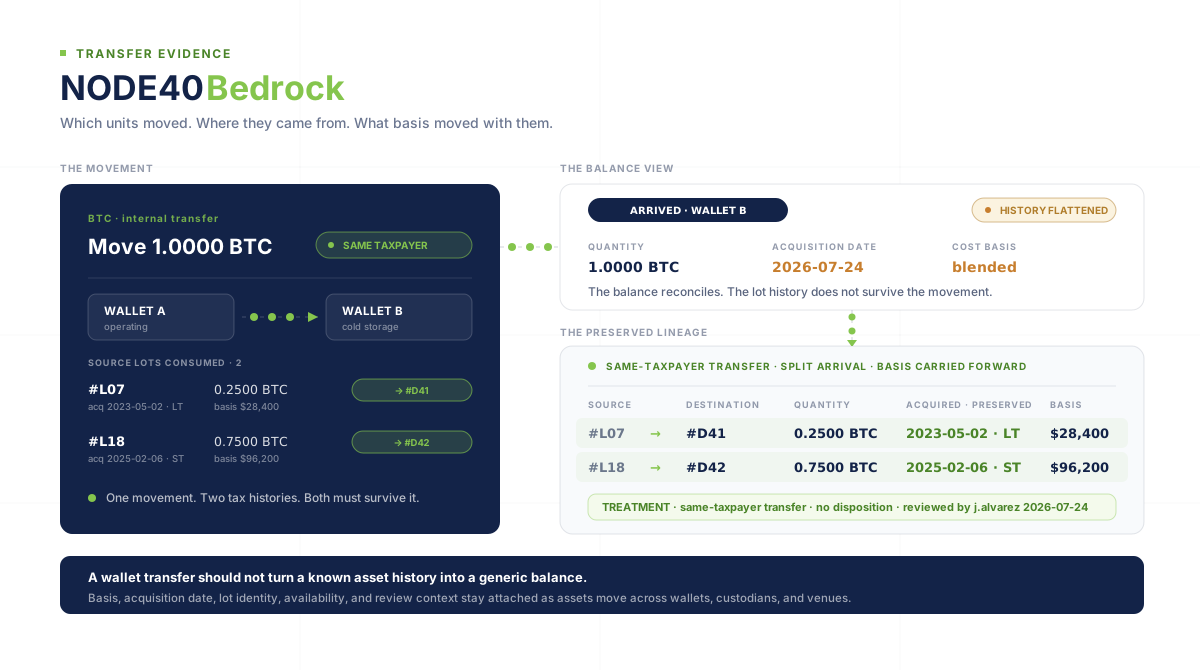
Most digital asset systems can tell you that an asset moved.
That is not enough.
For finance, tax, and audit teams, digital asset transfer evidence has to answer whether the asset's history moved with it. Basis. Acquisition date. Lot identity. Treatment. Review evidence. The facts that make a position explainable should not disappear because the asset changed wallets.
That is the transfer evidence problem.
The balance can be right while the record is still weak.
The Wrong Standard Is Balance Matching
A wallet transfer often looks clean from the outside. One address sends, another receives, and the quantity matches.
But a matched balance does not prove the accounting treatment. It does not prove which lots moved. It does not prove the original basis survived. It does not prove the receiving position can be defended later.
That gap is where manual reconstruction begins.
Teams end up relying on wallet exports, internal notes, screenshots, spreadsheets, and institutional memory to explain what should have been preserved at the time of movement. The work may be possible, but it is slow, expensive, and fragile.
The better standard is continuity: transfer evidence that preserves basis, lot history, and review context as the record changes.
Transfer Evidence Preserves The Financial Identity Of The Asset
If a transfer is supported as a same-taxpayer movement, the destination record should not treat the asset as newly acquired. It should carry forward the financial identity of the source lot, consistent with the governed lot history described in Bedrock Lot Intelligence.
That means the record can answer a more valuable question than "what is in this wallet?"
It can answer: "which asset history is in this wallet?"
That distinction matters when positions are sold, reported, reviewed, reconciled, or handed to an advisor. A clean balance is useful. A clean balance with preserved lot history is operationally different.
It gives the team a defensible record instead of another future rebuild.
Bedrock Was Built Around That Standard
Bedrock treats transfer evidence as part of the financial record, not as an after-the-fact explanation.
When assets move, Bedrock is designed to preserve the relationship between source activity, destination activity, lot identity, basis, acquisition date, treatment, and review context. If a movement draws from more than one lot, the destination history should reflect that instead of flattening distinct histories into a generic balance. That same evidence model connects to Bedrock's audit and governance controls when the record is reviewed later.
The point is not more detail for its own sake.
The point is better control.
Finance and tax teams should be able to look at a position and understand where it came from, what history it carries, and why the system treated the movement the way it did.
That is what makes the capability valuable. It reduces ambiguity before review pressure shows up. It makes reports easier to support. It gives internal teams and outside advisors a shared record instead of a reconstruction project.
This Is The Difference
Many tools can show wallet activity.
Fewer can preserve the financial history behind that activity in a way that remains useful across treasury, tax, accounting, and audit workflows.
That is where Bedrock is different.
It is not just tracking that assets moved. It is helping preserve the evidence that lets the organization explain what those assets are, where they came from, and what treatment follows them.
A wallet transfer should not turn a known asset history into a generic balance.
If your team is managing digital assets across wallets, custodians, venues, or reporting workflows, this is worth seeing in practice.
Schedule time with NODE40 to see how Bedrock handles transfer evidence.