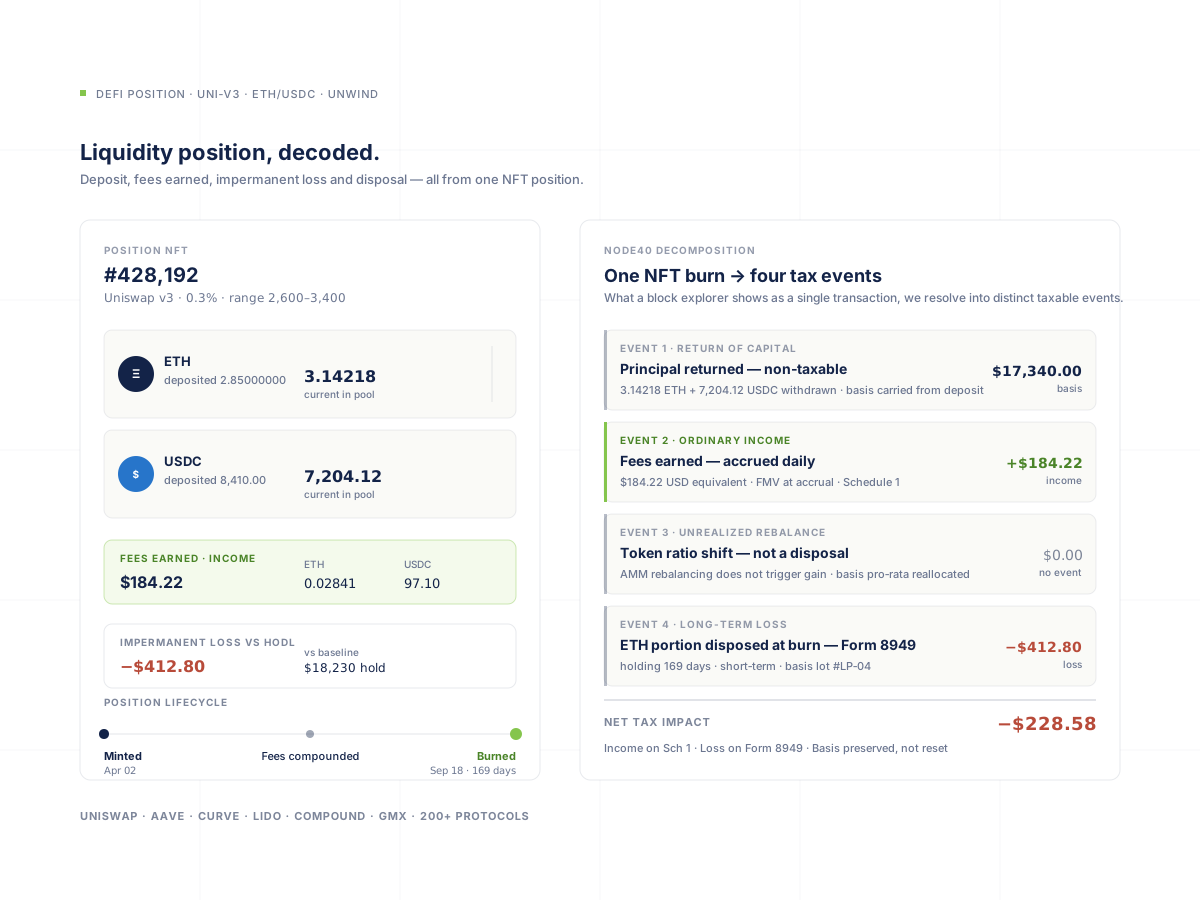
NODE40 accounts for DeFi activity with protocol-aware classification — so deposits, swaps, LP positions, rewards, and contract interactions carry the transaction context needed for reconciliation, tax treatment, and close support. Generic tools flatten DeFi into wallet movement; NODE40 preserves the protocol event — what entered a contract, what was received, and how it should be classified — so the accounting reflects what actually happened, not a best-guess approximation.
Many systems treat DeFi as ordinary wallet movement and collapse smart contract activity into generic exports. That may produce rows of data, but it strips out the transaction meaning teams need to reconcile balances, determine tax treatment, classify activity correctly, and explain results later. NODE40 tracks the lifecycle of DeFi transactions with protocol-aware context across deposits, liquidity provision, yield farming, staking, minting, swaps, rewards, and dispositions. Teams evaluating that workflow alongside broader accounting close support can review NODE40’s accounting workflows. For the full platform context, see the platform overview. For teams evaluating reconciliation depth and DeFi in one view, see NODE40’s crypto reconciliation software for DeFi accounting.


