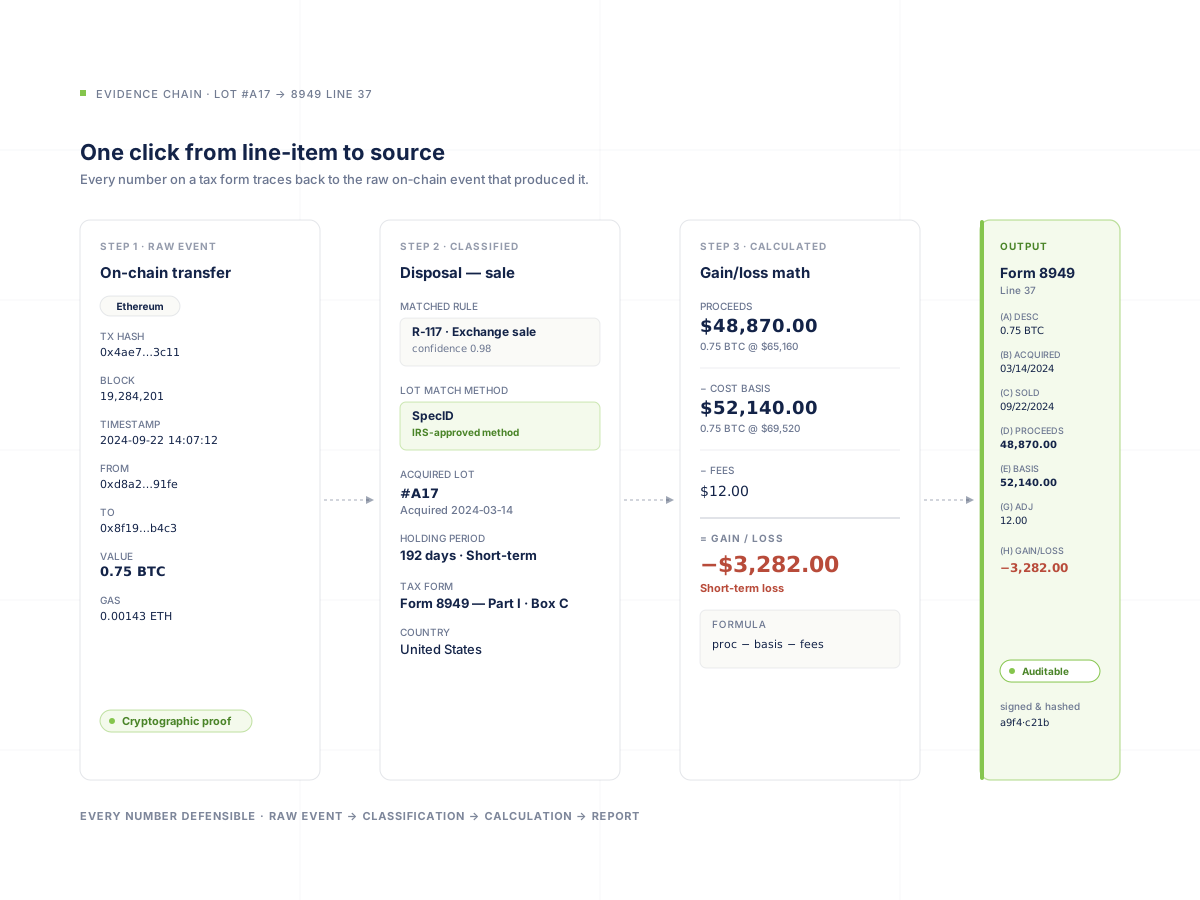
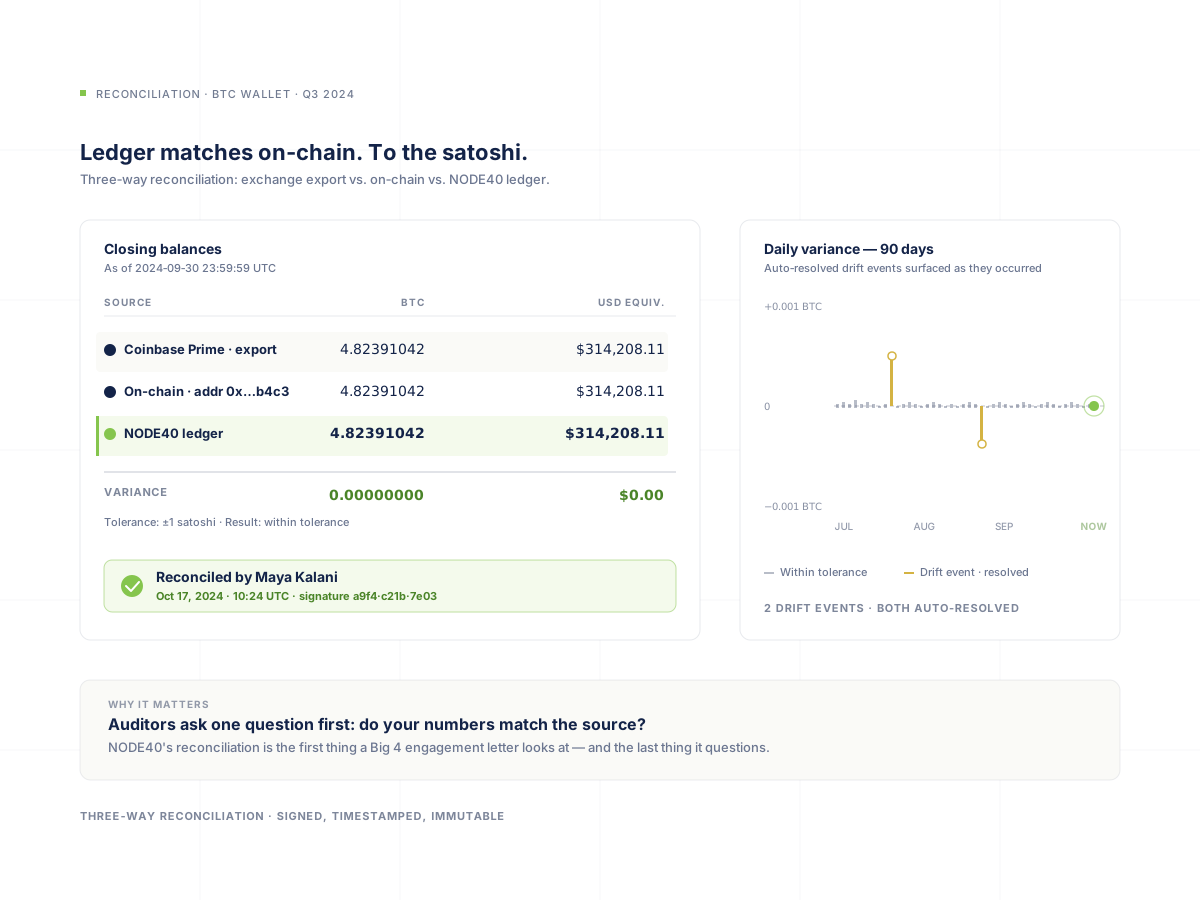
NODE40 is built for digital asset reporting that has to remain supportable after the first request list. Teams can trace balances through acquisition, transfer, yield, disposition, and classification decisions instead of relying on a summary export with missing context.
Evidence to review in a crypto audit software evaluation
Start with a reported balance or disposal and ask to follow the supporting record, not just view a dashboard:
- Source activity: transaction identifiers and the wallet, exchange, or custodian records behind the reported amount.
- Reconciliation: opening and closing balances, intervening transfers and rewards, and any unresolved differences.
- Valuation and cost basis: the inputs and lot history supporting the calculation, including transfers between accounts.
- Review context: classification decisions, assumptions, and exceptions that a reviewer must evaluate.
Use this evidence checklist to scope a NODE40 walkthrough around your activity. Reporting support does not replace an auditor's procedures or opinion, and it is distinct from a smart-contract security audit.
Teams looking for a practical definition can review what audit-ready digital asset reporting requires and how that standard applies in real finance and accounting workflows.
For digital asset treasury teams, NODE40 Bedrock extends this discipline with attributed overrides, surfaced shortfalls, previewed corrections, and closed periods that are enforced boundaries.