If you can't explain a number,it isn't defensible.

NODE40 Bedrock gives digital asset treasury teams an audit-ready governance layer where every entry carries who changed it, when, and why.

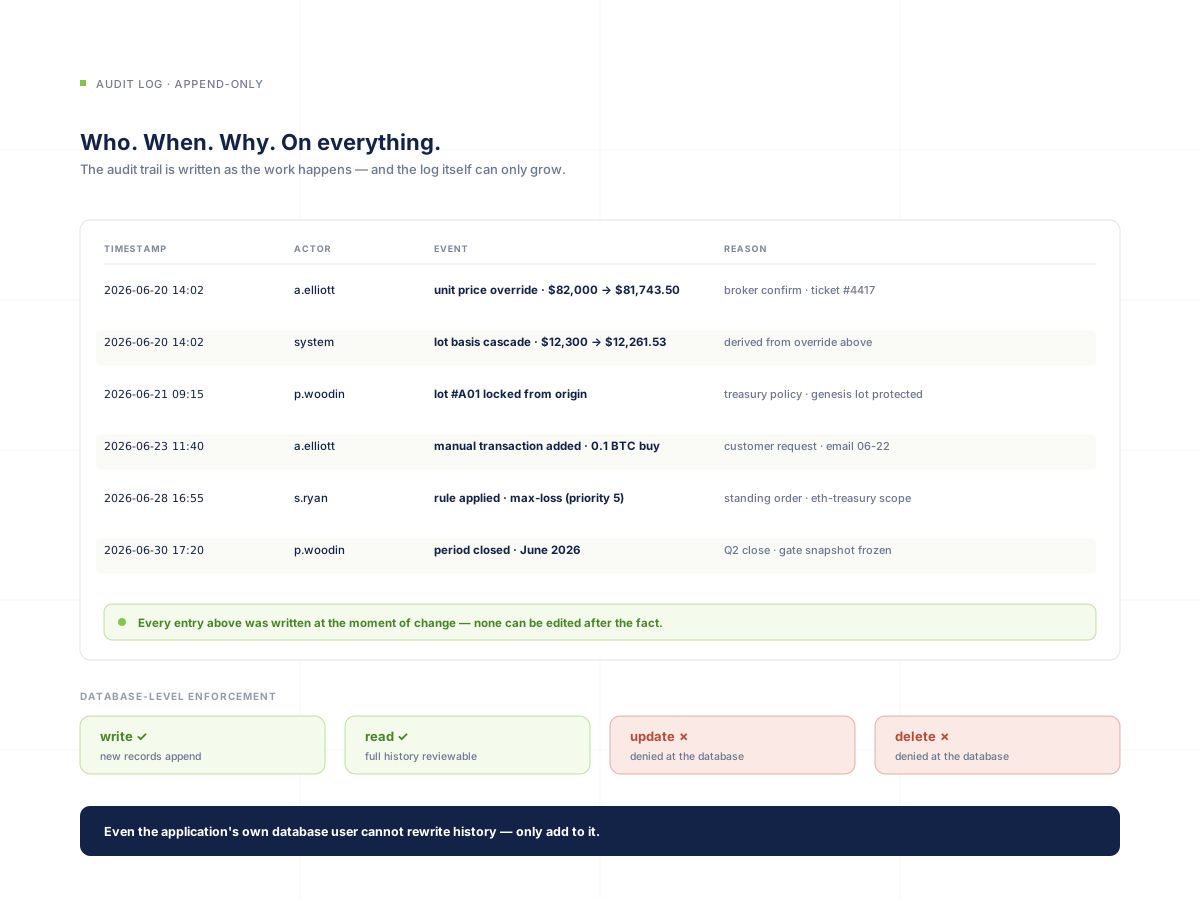
Bedrock append-only audit trail showing attributed entries with who made each change, when, and the stated reason.

Nothing changes silently

Nothing changes silently

A value override, a manual entry, a lot reassignment, a feed correction: each one is captured with a reason at the moment it happens, not reconstructed later from memory. When an auditor asks "why is this number what it is," the answer is already in the record.

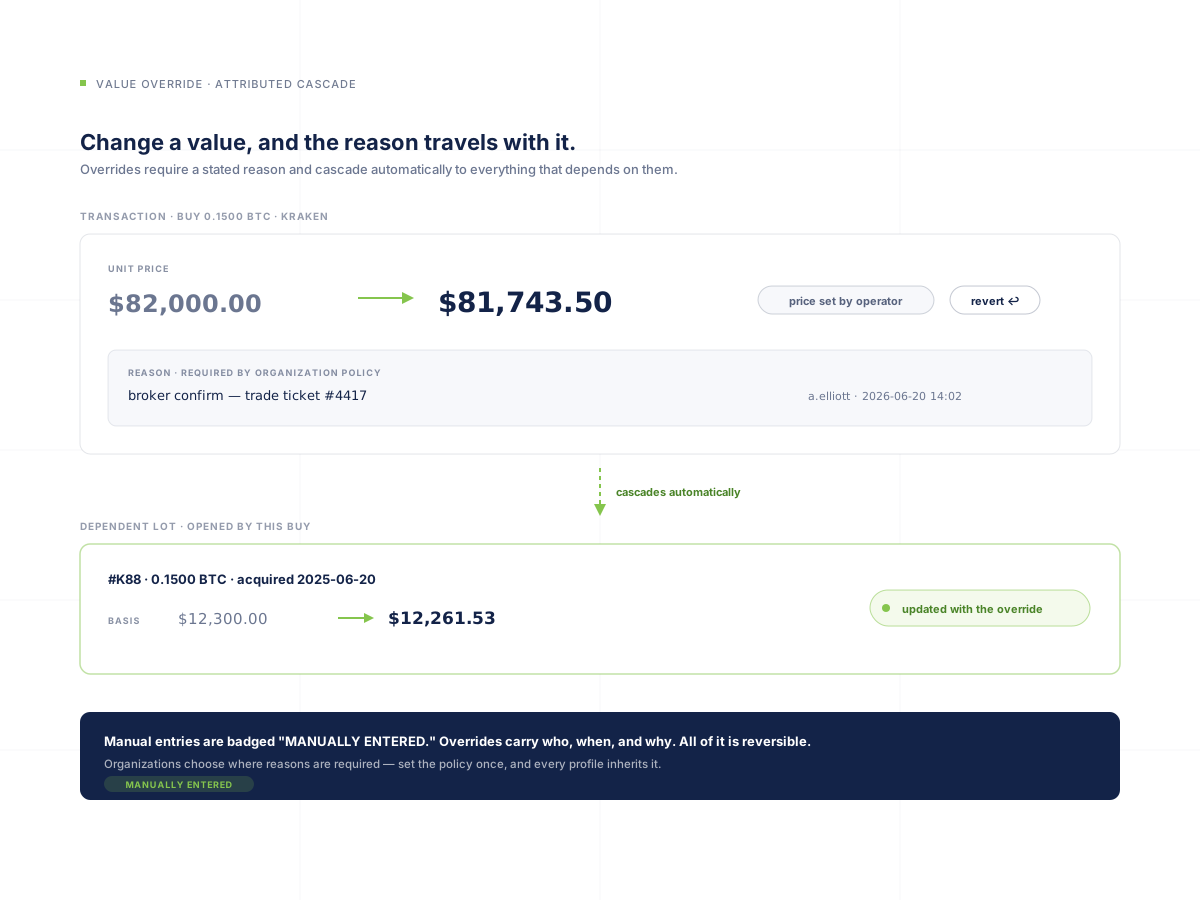
Overrides cascade with their reasoning attached. Change a unit price and the dependent lot's basis updates automatically, with the who, when, and why preserved on the transaction. Manual entries are permanently badged as manually entered. And the audit trail itself is append-only, so records can be written and read, never updated or deleted, even by the system's own database user.
Shortfalls get resolved, not hidden

Shortfalls get resolved, not hidden

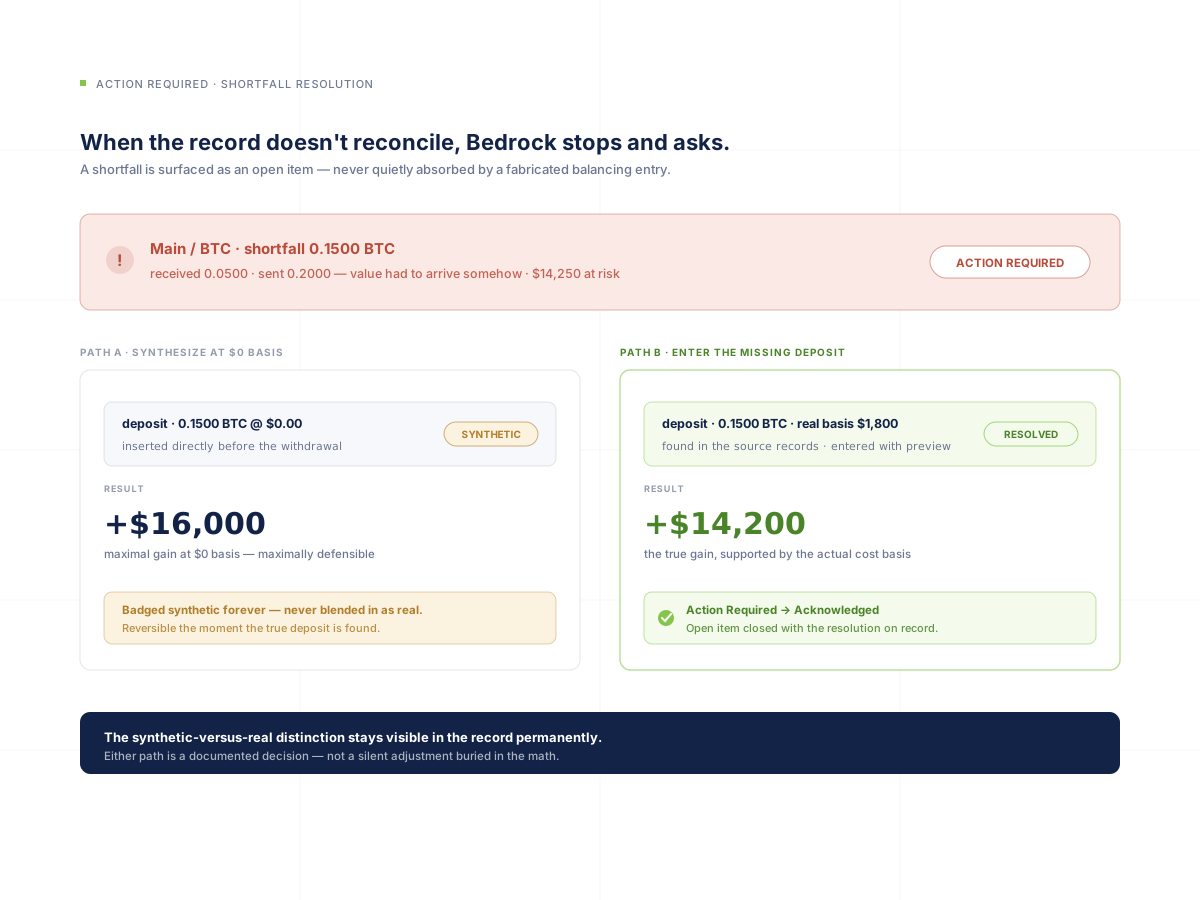
When holdings don't reconcile, Bedrock surfaces it directly rather than quietly balancing the books. In one real case, a 0.15 BTC shortfall ($14,250 at risk) was flagged in Action Required. The team could synthesize a placeholder entry, clearly badged as synthetic and never blended in as if it were real, or resolve it properly by entering the actual missing deposit with its true cost basis.

The system tracked the difference the whole way: a synthetic $0-basis entry inflated the gain to $16,000, while the real $1,800 basis brought it back down to $14,200. Only the second path closes the item as "Acknowledged."

Corrections show their blast radius before you commit

Corrections show their blast radius before you commit

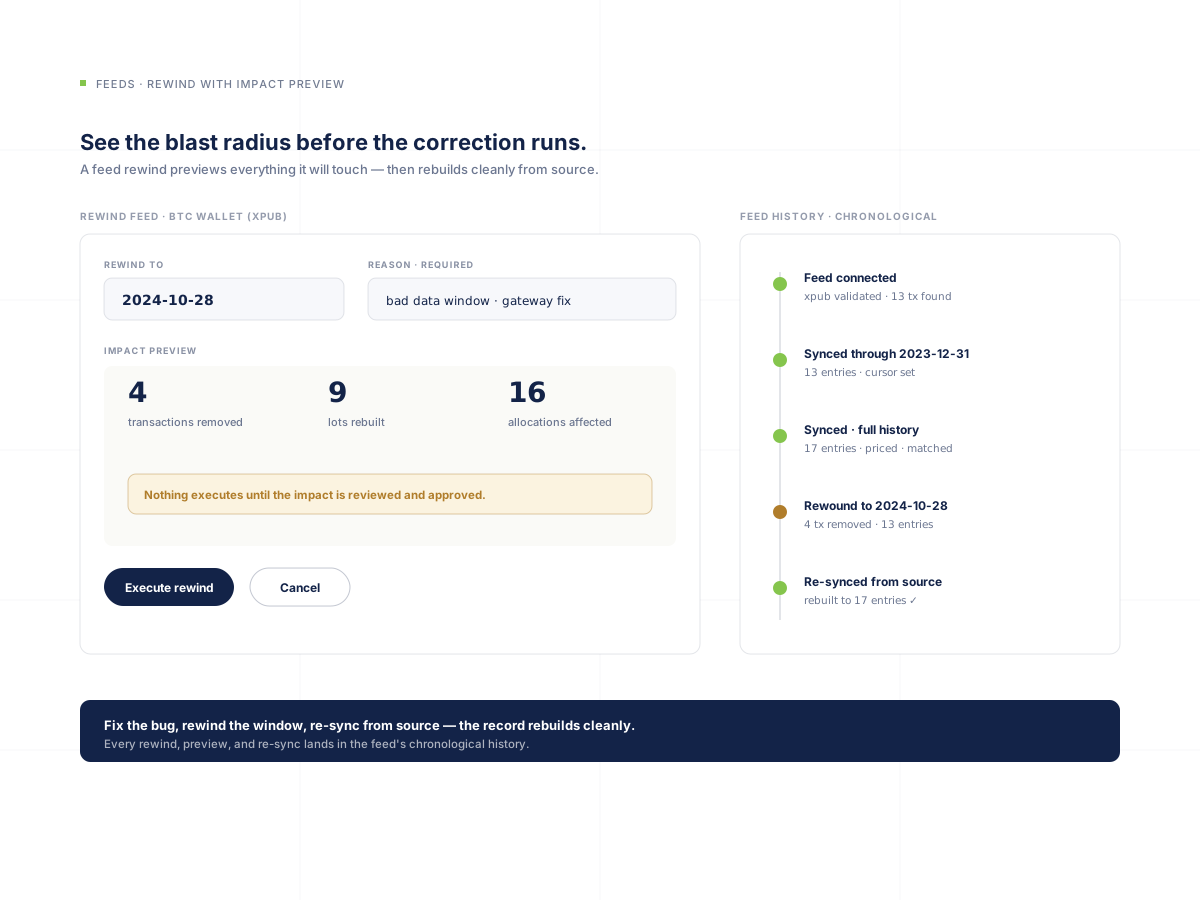
Fixing a bad data feed shouldn't mean guessing what else breaks. A feed rewind previews exactly what it will touch before it runs. In one case that meant 4 transactions removed, 9 lots rebuilt, and 16 allocations affected, so the team can approve the change with full knowledge of its scope instead of discovering the damage afterward.

After the rewind, the feed re-syncs from source and rebuilds the record. Every step, from the rewind to its preview to the re-sync, lands in the feed's chronological history.

Closed periods stay closed

Closed periods stay closed

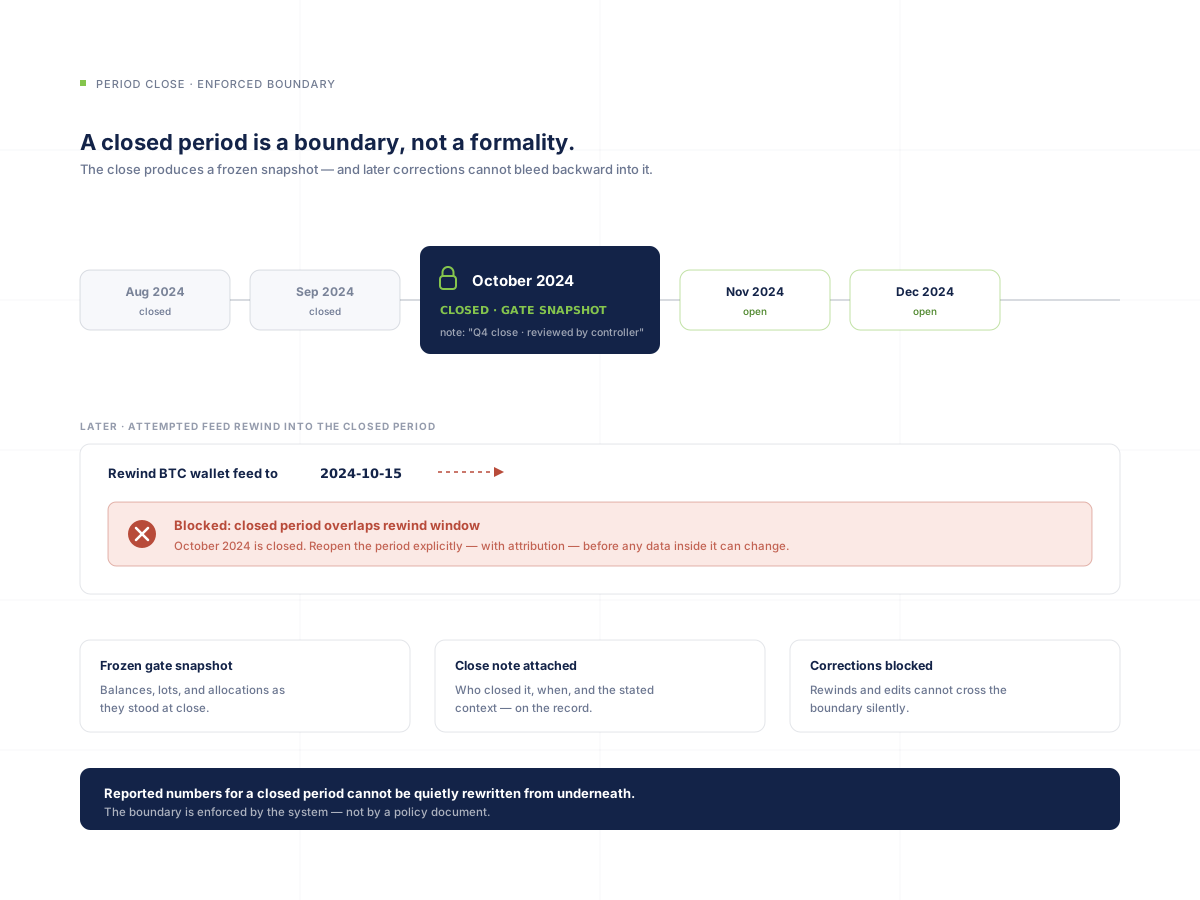
Once a period is closed, it's a real boundary, not a formality. A later attempt to rewind data back into an already-closed period was blocked outright, with the system stating plainly that the closed period overlapped the requested window.

Reported numbers for a closed period cannot be quietly rewritten from underneath. The close produces a frozen gate snapshot with the closer's note attached, a fixed point the organization can stand on.