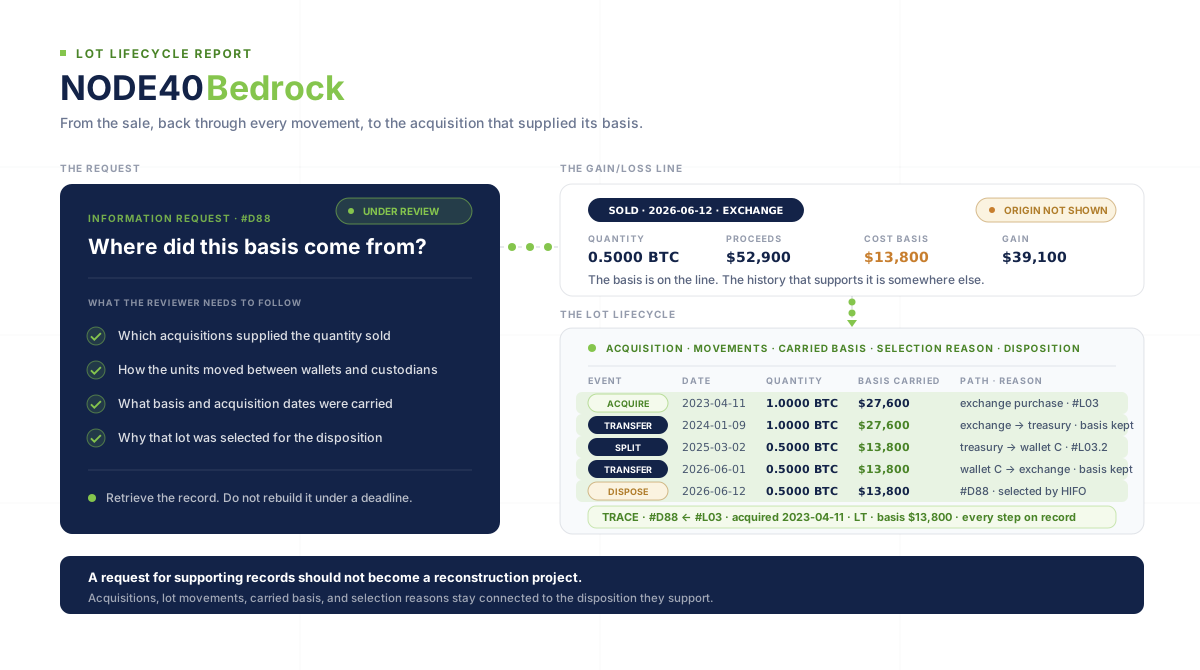
In our experience supporting clients through IRS audits, having the requested information at your fingertips is invaluable. A question about cost basis can reach well beyond the sale on a tax return. It can require showing when the asset was acquired, what it cost, and how that basis followed the asset through the movements that came before the sale.
When that history is already connected, the team can retrieve it and address the question. When it is not, the request becomes a reconstruction project.
That is the practical reason behind Bedrock’s Lot Lifecycle Report. It makes the history connecting acquisitions, lot movements, and dispositions available in an export that finance teams and their advisors can inspect and analyze.
The important part is not another file in the Report Center. It is having the supporting record before someone asks for it.
A Sale Is the End of a Longer History
A gain/loss report can show the quantity sold, the proceeds, the cost basis, and the resulting gain. Those figures are useful, but they do not necessarily explain how the lot being sold arrived at that point.
Consider an asset purchased on an exchange, transferred to a treasury wallet, and later divided among several wallets. Part of the position eventually returns to an exchange and is sold. The sale appears in one place. The original purchase appears somewhere else. Between them are movements that explain which acquisition history and basis belong to the quantity disposed of.
A reviewer may need to follow that path rather than simply accept the basis shown on the final line.
This becomes harder when activity spans years, custodians, wallets, and thousands of transactions. A transfer may divide a lot. A later movement may carry only part of it forward. Several source lots may contribute to a position. The reporting task is not just to list those transactions, but to preserve how the quantities and basis connect.
Having all the files is not the same as having those connections available.
Reconstruction Is Work You Do Not Want to Start During an Audit
When the history has to be assembled after a request arrives, someone must collect the source records, identify the relevant movements, connect the quantities, and reconcile the result to the reported disposition.
That work can pull controllers, tax teams, and advisors away from their current responsibilities. It can also create a second review problem: explaining the reconstruction itself. Which records were used? How were the transfers connected? Where did a carried acquisition date or basis amount come from?
Our experience with IRS audits makes the value of preparation concrete. The difference is not whether the reviewer can ask a difficult question. It is whether answering that question starts with an existing record or an open-ended search through historical data.
The same distinction matters in a financial review or regulatory examination. A total may be the starting point, but the supporting history is what allows someone else to follow the calculation.
What the Lot Lifecycle Report Adds
Bedrock’s Lot Lifecycle Report provides a structured CSV export of lot events and quantity movements. It lets a reviewer work backward from a disposed lot through its recorded history toward the acquisition that supplied its basis.
The report brings together the quantities moved, the basis carried, the carried acquisition dates, and the related transaction and wallet information. It also includes the recorded lot-selection reason, helping connect the quantity used in a disposition to the decision that selected it.
For a finance team or advisor, that supports practical questions:
- Which acquisitions contributed to the quantity sold?
- How did those quantities move between wallets or custodians?
- What basis and acquisition dates were carried through those movements?
- How does the lot history connect to the disposition under review?
The report is detailed data for analysis, not a presentation-only statement. Teams can work with it in their own review processes, including scripted analysis when the volume makes a manual walkthrough impractical.
It does not replace source documentation or professional judgment. Its purpose is to make the recorded lineage available without requiring the team to recreate those connections from separate exports each time a question comes up.
Readiness Means Being Able to Retrieve the Support
A useful test for a digital asset reporting process is straightforward: take a reported disposition and ask someone other than the preparer to follow its basis back through the record.
Can they identify the acquisitions behind it? Can they follow the intervening movements? Can they explain the quantities and dates without depending on the preparer’s memory or a separate spreadsheet built for the occasion?
Those are practical measures of review readiness. They matter before an audit begins, when the organization still has time to identify missing history and resolve questions through its normal reporting process.
Bedrock’s Lot Lifecycle Report makes that review possible from the lot history held in the system. For teams managing substantial digital asset activity, the value is being able to respond from a connected record rather than starting over when supporting information is requested.
A request for supporting records should not become a reconstruction project.
Schedule time with NODE40 to see the Lot Lifecycle Report in Bedrock.